
National Parks & Heritage Sites
Harrington Beach State Park
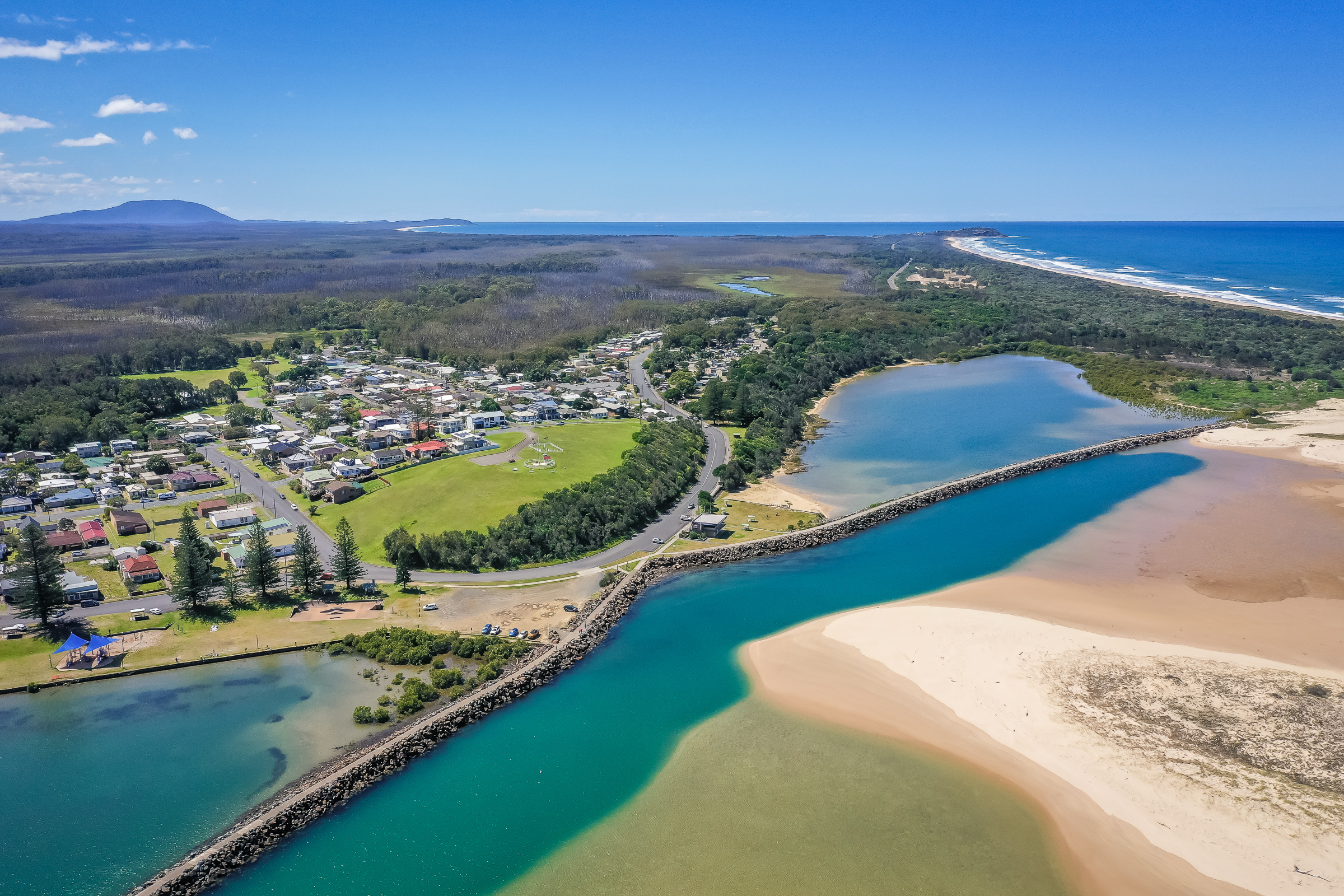
Harrington Beach State Park is one of the Mid North Coast's hidden gems. Spanning 431 hectares from Harrington to Crowdy Head, the park combines pristine beaches, the iconic Harrington Breakwall, peaceful estuary foreshores, a rare coastal rainforest and abundant native wildlife. Whether you're walking, fishing, swimming, birdwatching or simply soaking up the spectacular scenery, the park offers something for everyone throughout the year.
Pilot Hill
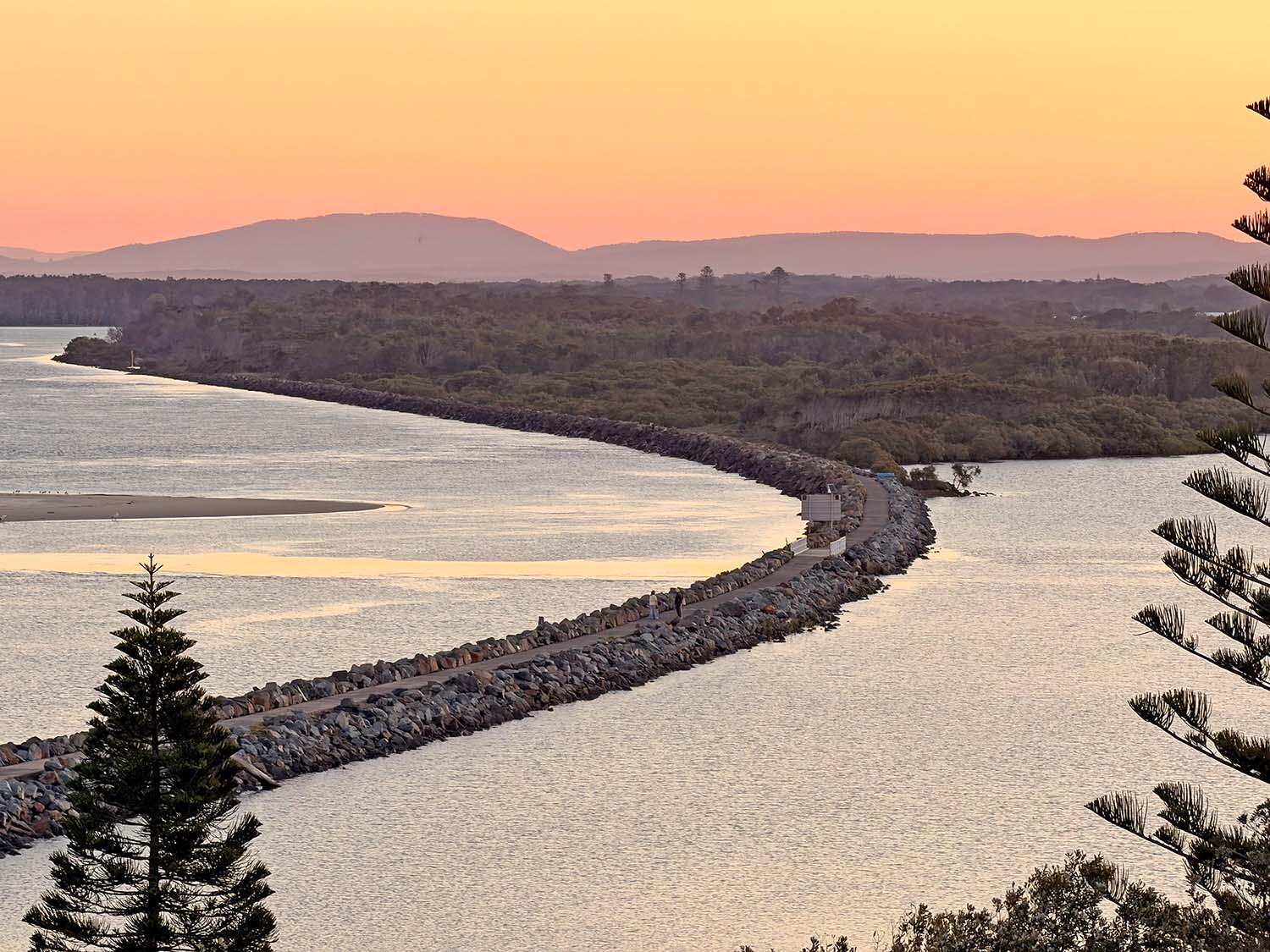
Perched above the northern entrance to the Manning River (there is a southern entrance near Old Bar), Pilot Hill is one of Harrington's most scenic and historically significant landmarks. Once home to the pilot station that guided ships safely across the treacherous river bar, the hill now offers visitors breathtaking panoramic views of the Breakwall, the Pacific Ocean, the Manning River and mountains to the west. It is an ideal spot for photography, particularly at sunrise and sunset.
The pilot station was established in the 1860s. Harbour pilots lived and worked on the hill, guiding ships safely across the dangerous Manning River bar before modern navigation systems existed. The station operated for almost 100 years.
There is a historic cemetery on the hill – The small cemetery contains the graves of several pilots and members of their families. These graves are of local heritage significance and provide a tangible link to Harrington's early settlement and maritime heritage.
Surrounded by Harrington Beach State Park, Pilot Hill is an excellent place to watch seabirds, enjoy coastal vegetation and, during winter, and spot migrating humpback whales.
Pilot Hill is only a few minutes from Harrington's town centre and can be combined with a visit to the Breakwall, Harrington Lagoon, the Rainforest Walk or Crowdy Head, making it an ideal stop on a day of exploring the area.
Crowdy Bay National Park
With plenty to see and do, Crowdy Bay National Park is truly beyond compare. Covering 10,080 hectares, it is a sought-after destination for beach camping, picnics, fishing, swimming, surfing and bushwalking.
Wildlife lovers will not be disappointed. The park is home to an abundance of native animals, including kangaroos, wallabies, kookaburras and goannas. Keep your eyes peeled for the elusive koala. During spring, the sand dunes come alive with colourful native wildflowers.
The traditional custodians of Crowdy Bay are the Biripai People, who have cared for this land for thousands of years. The National Park provided an abundant source of food, including fresh fish, wallabies and native plants. The park contains a number of significant Aboriginal cultural sites, including one believed to be around 6,000 years old.
Be sure to visit the historic writer's retreat built during World War II by local farmer and grazier Ernie Metcalfe for renowned Australian author Kylie Tennant. Constructed from local mahogany slabs beneath towering eucalypts, the simple one-room cabin provided a peaceful sanctuary where Tennant could write and draw inspiration from the surrounding landscape.
Tennant later immortalised both Ernie Metcalfe and Crowdy Bay in her novel The Man on the Headland. In 1976, she generously donated the hut and surrounding land to Crowdy Bay National Park, ensuring its preservation for future generations.
The hut is located along the Metcalfes Walking Track, where visitors can step inside this unique piece of literary and local history. Although the original cabin was destroyed in the 2019 bushfires, it has since been faithfully rebuilt by the NSW National Parks and Wildlife Service, allowing visitors to once again experience this special place
There are several campgrounds within the park, including Crowdy Gap, Kylie's Beach, Indian Head and Diamond Head. All are well maintained and offer amenities, hot showers, picnic areas and BBQ facilities.
Crowdy Bay National Park is open every day but may close from time to time due to severe weather or fire danger. Parking is available, and a small park entry fee applies. Fees can be paid at the Diamond Head campground office.
FOR MORE INFORMATION VISIT: National Parks and wildlife service

Kylie's Hut (destroyed by the 2019/2020 bush fires)

Diamond Head

Crowdy Head Light House today

Crowdy Head Light House 1902
Crowdy Head Lighthouse
Standing 61 metres above sea level, the historic Crowdy Head Lighthouse was constructed of stone in 1878. It was the last in a series of small lighthouses designed by James Barnet, the Colonial Architect of New South Wales. Similar in design to the Tacking Point Lighthouse at Port Macquarie (which can be seen on a clear night), the Crowdy Head Lighthouse was one of 133 lighthouses built around the Australian coastline during this era.
Originally staffed by a single lighthouse keeper, it remained manned until 1928, when it was converted to automatic operation. The lighthouse is still active today and flashes every 10 seconds. The original lighthouse-keeper's residence was located beside the lighthouse, and its footings are still visible.
For expansive panoramic views, visit the lighthouse reserve. Follow Crowdy Head Road into Pacific Drive, then turn left into Elizabeth Street, which leads directly to the lighthouse. There is a car park at the top and plenty of space to explore.
Looking north, you can see beyond Diamond Head to the Three Brothers mountains (North Brother, Middle Brother and South Brother), which were named by Captain James Cook in 1770 as he sailed along Australia's east coast. Looking south, on a clear day, you can see as far as Seal Rocks.
COMMUNITY
EXPLORE
FIND

Harrington & Surrounds website is owned & maintained by the Harrington & Surrounds Business & Community Association Incorporated.
For more businesses in our area:
